
The Ultimate Guide to Olive Oil Tasting in Crete
If there is one ingredient that tells the story of Crete better than almost any other, it is olive oil.
For thousands of years, olive trees have been part of the island’s landscape, culture and everyday life. They surround villages, cover hillsides and appear almost everywhere you travel across Crete.
But have you ever actually tasted olive oil?
Not simply poured it over a salad or dipped bread into it, but stopped for a moment and tasted it on its own?
An olive oil tasting can completely change the way you understand this everyday ingredient.
You’ll discover aromas, flavours and sensations you may never have noticed before—and you’ll begin to understand why Cretan olive oil is such an important part of the island’s culinary identity.
What Is an Olive Oil Tasting?
An olive oil tasting is similar in some ways to wine tasting.
Instead of simply using the oil as an ingredient, you taste it on its own and pay attention to its aroma, flavour and texture.
A guided tasting can introduce you to:
- Different olive varieties
- Different harvesting periods
- Freshness and quality
- Fruity aromas
- Bitter and peppery sensations
- The influence of the land and climate
- How olive oil changes the flavor of food
And the best part?
You don’t need to be an expert.
You simply need to be curious.
How Do You Taste Olive Oil?
Professional tastings follow a simple process, but you can also use the same approach at home.
1. Look
Good extra virgin olive oil can range in color from green to golden, depending on factors such as olive variety and maturity.
However, color alone doesn’t tell you whether an olive oil is good.
That’s why professional tastings often use tasting glasses that minimize the influence of color.
2. Smell
This is where the experience really begins.
Warm the oil gently in your hands and take a moment to smell it.
You may discover aromas reminiscent of:
- Fresh grass
- Green tomato
- Artichoke
- Almond
- Fresh herbs
- Green fruit
- Citrus
A fresh olive oil should smell alive and vibrant.
3. Taste
Take a small amount and allow it to spread across your palate.
Notice the balance between fruitiness, bitterness and pungency.
Then take a small breath through your mouth.
You may experience a slight peppery sensation in the throat.
That characteristic sensation is often one of the signs of a fresh, robust olive oil.
4. Compare
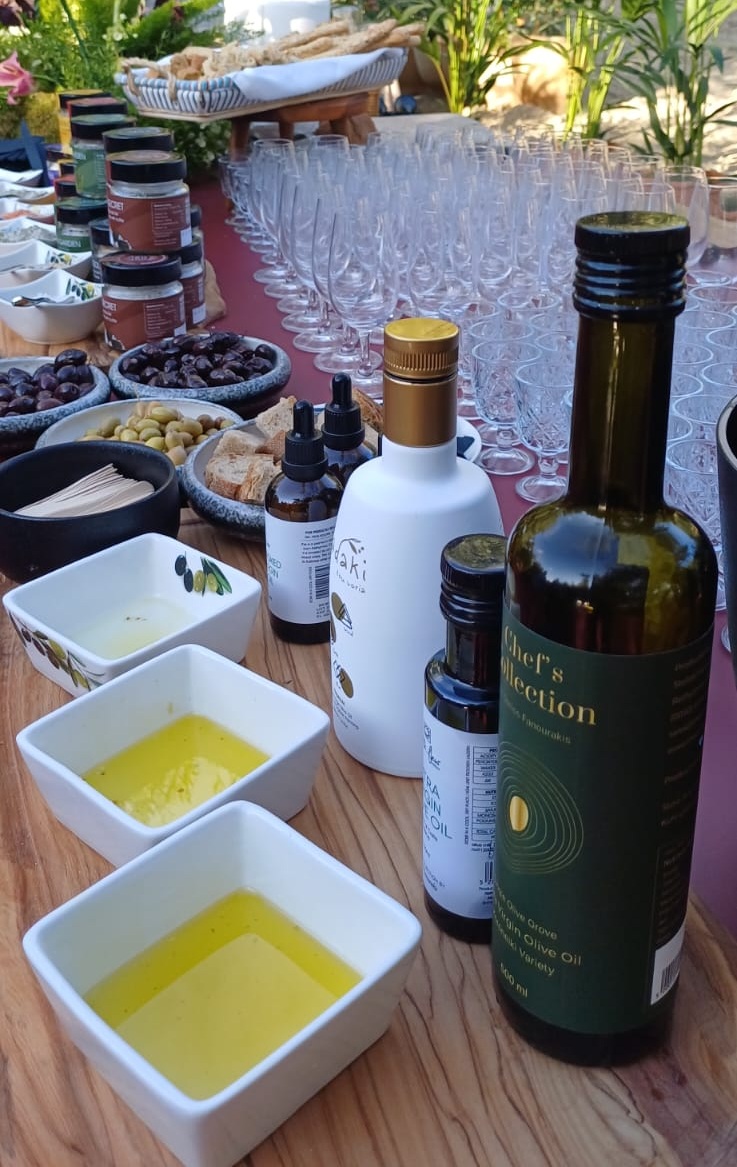
The real fun begins when you taste two or three oils side by side.
Suddenly, the differences become obvious.
One may taste delicate and fruity.
Another may be intensely green and peppery.
A third may feel softer and more balanced.
There is no single flavor that defines every excellent olive oil.
What Makes Extra Virgin Olive Oil Different?
Extra virgin olive oil is the highest quality category of olive oil and must meet specific chemical and sensory requirements.
But for a visitor tasting olive oil for the first time, the most important thing is understanding what a good oil should feel and taste like.
A quality extra virgin olive oil should be:
Fresh.
It should have a clean, pleasant aroma and flavour.
Fruity.
The oil should show positive aromas and flavours associated with fresh olives.
Balanced.
Bitterness and pungency can be positive characteristics when they are balanced with fruitiness.
Free from unpleasant defects.
Old, rancid or musty aromas are not characteristics you want in a quality extra virgin olive oil.
Why Is Cretan Olive Oil So Special?
Olive oil is produced in many Mediterranean countries, but Crete has a particularly strong relationship with the olive tree.
The island’s landscape, climate, traditional olive-growing culture and the widespread cultivation of the Koroneiki variety have helped make olive oil an essential part of Cretan cuisine.
For generations, olive oil has been used not only for cooking but also as a finishing ingredient.
A drizzle over vegetables.
A little over grilled fish.
Fresh oil over warm bread.
A generous pour over dakos.
Simple food becomes something completely different when the olive oil is exceptional.
From Olive Tree to Bottle
The quality of olive oil begins long before the bottle.
It begins in the grove.
Harvest timing matters. Handling matters. Transport matters. Extraction matters.
Freshly harvested olives need to be handled carefully and taken for extraction without unnecessary delays.
At Alatsssi, olive oil is not simply another ingredient we purchase.
We are producers ourselves.
Our own extra virgin olive oil comes from carefully selected olives, with particular attention to the harvest and the time between picking and extraction.
This connection between the olive tree, the producer and the final bottle is an important part of our philosophy.
Did You Know?
At Alatsssi, we produce our own extra virgin olive oil as well as artisan sea salt, gourmet salt blends and Cretan thyme honey.
Some of the seasonal vegetables used in our culinary experiences are also from our own production.
For us, knowing where an ingredient comes from is just as important as knowing how to cook it.
How to Pair Olive Oil with Food
Once you’ve tasted olive oil on its own, try pairing it with different foods.
A delicate oil can work beautifully with:
- Fresh salads
- Fish
- Mild cheeses
- Fresh vegetables
A more robust, peppery oil can stand up to:
- Grilled meats
- Beans
- Roasted vegetables
- Strong cheeses
- Rustic breads
And sometimes the simplest pairing is the best:
Fresh bread + excellent olive oil + a little sea salt.
That’s Cretan food at its most uncomplicated.
Olive Oil Is More Than an Ingredient
One of the most interesting things about olive oil is that it connects so many aspects of Cretan life.
It connects the farmer with the chef.
The olive grove with the kitchen.
The harvest with the table.
And the past with the present.
When you walk through a Cretan olive grove, you’re not simply looking at trees.
You’re looking at part of the island’s history.
When you taste fresh olive oil, you’re tasting the result of an entire agricultural tradition.
And when you share it around a table, you’re experiencing a small part of Cretan hospitality.
Experience Olive Oil with The Olive Van
This is where the story of olive oil becomes an experience.
The Olive Van is Alatsssi on the move—a mobile tasting experience created to introduce visitors to the world of Cretan olive oil, salt and local gastronomy.
Rather than sitting through a formal lecture, guests are invited to taste, compare, ask questions and discover the ingredients through an informal and interactive experience.
You might taste different olive oils.
Compare flavors.
Learn how to identify the characteristics of extra virgin olive oil.
Discover how olive oil pairs with Cretan products.
And, most importantly, enjoy the experience together.
Because food education doesn’t have to feel like a lesson.
It can simply be a great conversation around a table.
Chef’s Tip
Don’t judge an olive oil only by how strong it tastes.
A very peppery oil isn’t automatically better than a delicate one.
The best olive oil for you is the one whose freshness, fruitiness, bitterness and pungency create the right balance for the food you’re eating.
Frequently Asked Questions
Do I need previous experience to join an olive oil tasting?
Not at all.
Olive oil tastings are designed for beginners as well as people who already know and appreciate olive oil.
Is Cretan olive oil always very strong?
No.
Cretan olive oils can have very different sensory profiles, from delicate and fruity to intense and peppery.
Can children participate?
Yes. An olive oil tasting can be an enjoyable and educational experience for families, with age-appropriate explanations and tasting activities.
Can olive oil be paired with food?
Absolutely.
In fact, tasting olive oil alongside bread, vegetables, cheese or other Cretan products is one of the best ways to understand how its flavour changes with different foods.
Can I buy Cretan olive oil to take home?
Yes. A tasting is a great way to discover the style of olive oil you enjoy before choosing a bottle to take home.
Taste Crete through Its Olive Oil
You can visit Crete for its beaches.
You can explore its mountains and villages.
You can discover its history.
But if you really want to understand the island, spend some time around its table.
Taste its olive oil.
Taste its salt.
Taste its honey.
Taste its vegetables, cheeses, bread and wine.
Because Cretan gastronomy isn’t about complicated recipes.
It’s about exceptional ingredients, generous hospitality and a deep connection with the land.
At Alatsssi, we are proud to share that connection through our own products, our culinary experiences and The Olive Van.
From the olive grove to the tasting table, every bottle has a story.
Come and taste it for yourself.
Experience Cretan Olive Oil with Alatsssi
Discover the world of Cretan olive oil through a relaxed and interactive tasting experience with The Olive Van.
Taste, compare, learn and enjoy some of the ingredients that make Crete unique.
The Olive Van — bringing the taste of Crete to you.